Are you one of those marketers using regular digital communications? Digital communication like email is on the rise. Why not? We are in the 21st-century digital era. The rise in online activity has made phishing a major concern.
Today, businesses are building mail communication trust and authenticity by using the Verified Mark Certificate (VMC) and Common Mark Certificate (CMC) methods.
The VMC and CMC allow companies to send emails using legitimate funnels. Using these marks the company’s email becomes trusted, recognizable, and authenticated.
Are you confused with these marking terms? Head on and read this article explaining the difference between VMC and CMC and other parameters.
Understanding Verified Mark Certificate (VMC)
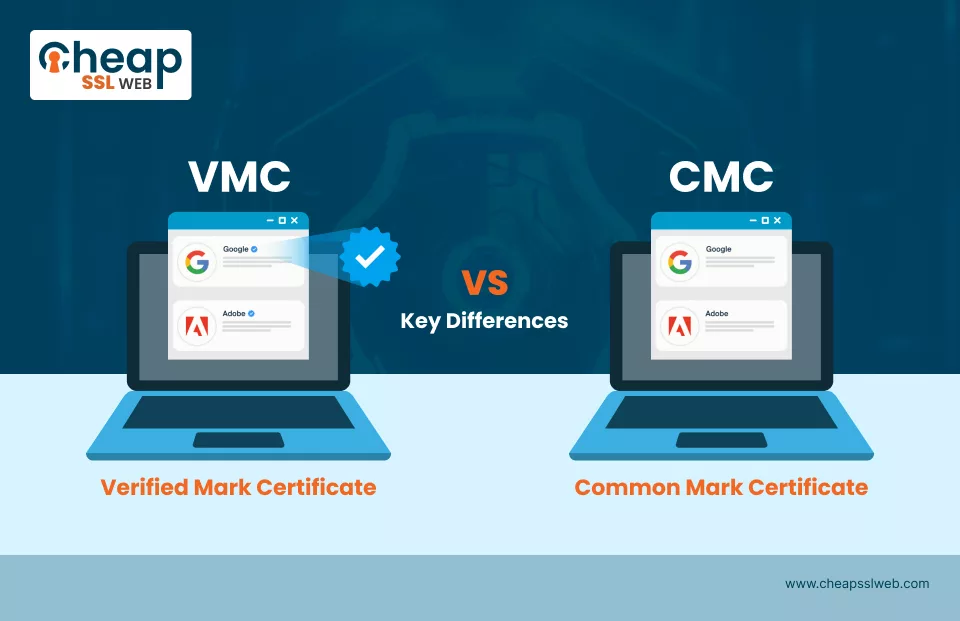
In simple terms, Verified Mark Certificate (VMC) is a type of digital mark certificate that allows business organizations to display the company trademark logo when sending emails to their customers. Your company logo is displayed in emails in collaboration along with Gmail’s blue verified tick mark badge with Brand Indicators for Message Identification (BIMI).
Also, if you use VMC, companies must implement domain-based message authentication, reporting, and conformance (DMARC) to show the firm’s legitimacy.
Example of Verified Mark:
With VMC, the trademark logo of brand (sender) will display next to its sender email ID along with blue verified checkmark sign. With this verification mark, your customers know the mail is from a trusted source.

Understanding Common Mark Certificate (CMC)
On the other hand, CMC is also a digital mark certificate. However, its primary purpose is to verify the authenticity of email. CMC allows companies to display their logo beside their mail ID. The logo can be seen even before the email is opened by your targeted customers. Did you know? CMC does not require a trademark logo registration, unlike VMC.
Recently, Google also allowed businesses to use Common Mark Certificate with BIMI tools. CMC is used by many organizations to display their company logo without registering their logo trademarks.
Example of Common Mark:
Verified brand logo of sender will be display without any verification mark on its email ID.
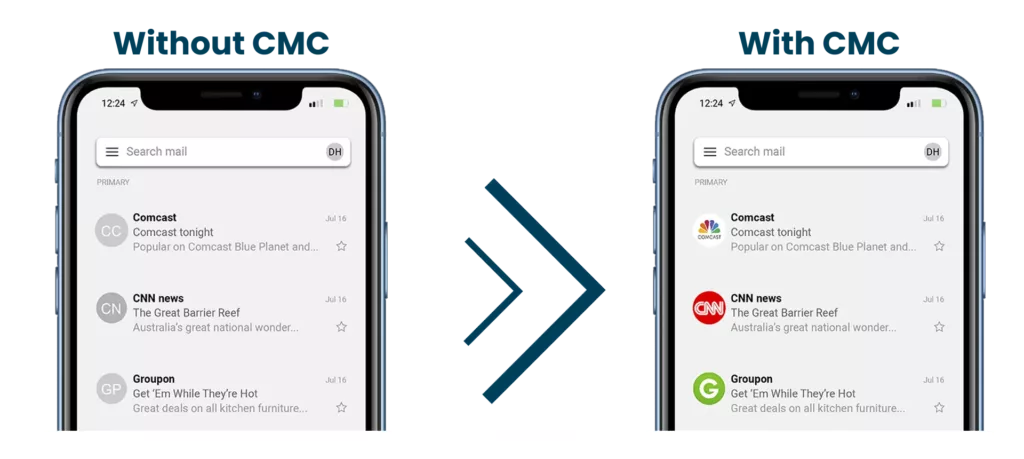
Table Showcasing the Difference Between VMC and CMC
| Verified Mark Certificate (VMC) | Common Mark Certificate (CMC) | |
| Does it Require Trademark Registration | Yes | No |
| Does it have a Verification Mark & Logo Display | You get a blue verification mark along with the brand logo display. | You only get the brand logo display without the blue verification mark. *you must have used the company logo for at least a year or should be a modified trademark. |
| What are the Supported Email Providers | Google Mail, Yahoo, Apple, and Outlook mail | Google mail |
| What is the Security Level of these marks | VMC has the highest level of security and is the safest option | Not as secure as VMC |
| How Much Does It Cost | It is an expensive process. Requires trademark logo to be registered with Mark Verifying Authority (MVA) | Cheaper as compared to VMC. It does not require logo trademark registrations. |
Conclusion
A verified mark is a more trustable and authentic form of digital certification as compared to a common mark. VMC will have a blue verified mark along with the display logo while CMC will only have a display logo without any verification mark.
Both marks are used by enterprises to bring legitimacy to their email source. However, CMC is currently limited to Gmail whereas verified mark is given through many email providers. Purchase DigiCert Mark Certificate as per your requirements at best price.

Buy S/MIME Certificates
Digitally Sign Emails and Encrypt Emails using S/MIME or Email Signing Certificates and Prevent Phishing and Man-in-the-middle Attacks
Starts at Just $9.49/Yr